
Dry ice blasting as a cleaning technique: a complete overview
An efficient, safe and continuous production process stands or falls with thorough maintenance. When you are looking for the most effective way to clean your valuable machines and installations, dry ice blasting is often the ideal solution. On this in-depth page we explain from A to Z what this innovative industrial cleaning technique involves, exactly how it works and in which situations it is the best choice for your company.
What is dry ice blasting?
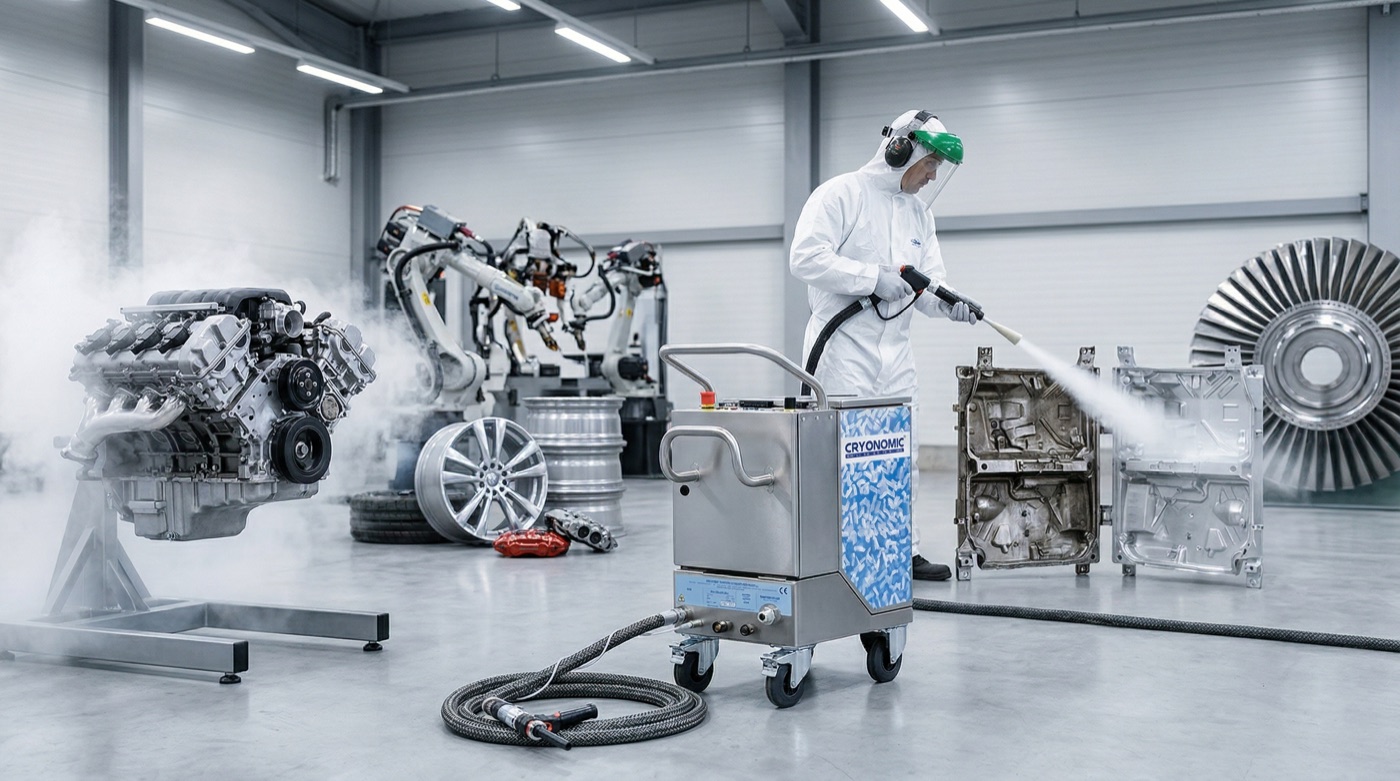
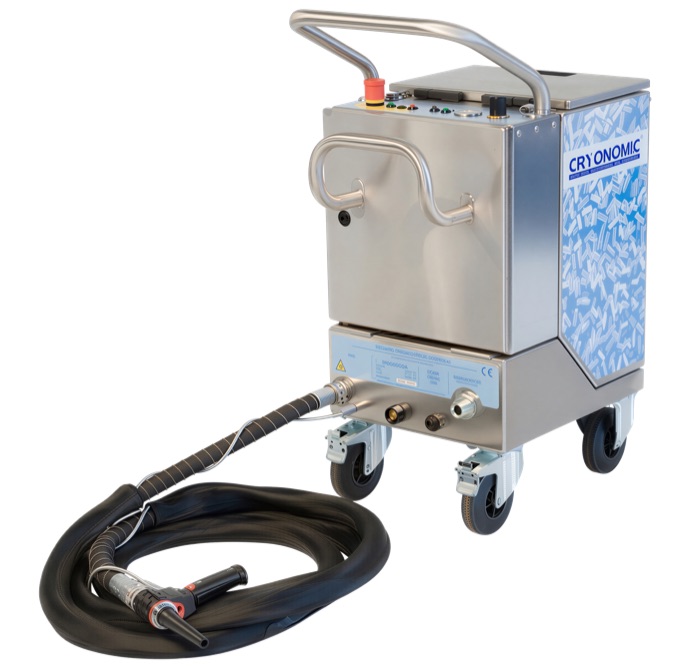
Dry ice blasting is an environmentally friendly industrial cleaning technique in which small pellets of solid carbon dioxide (CO₂) are blasted against a surface under high pressure. The technique removes stubborn contamination without using water or chemicals, and leaves absolutely no residue behind.
What is CO₂ dry ice?
Dry ice is the solid form of CO₂. It has an extremely low temperature of −79 °C and is completely moisture-free. At atmospheric pressure it evaporates straight into a gas (sublimation), without first becoming a liquid.
A gentle and safe alternative
Because dry ice is relatively soft, it is a non-abrasive cleaning technique. This means it cleans surfaces without roughening or scratching them. It is the perfect way to remove stubborn dirt while the underlying structure — such as a delicate mould — stays intact. That makes it a high-quality alternative to sandblasting, which is far more aggressive and does remove material.
How does dry ice cleaning work?
The effectiveness of dry ice blasting rests on three fundamental principles:
- Kinetic impact. Using compressed air, the dry ice pellets are blasted against the contaminated surface at supersonic speed. This impact helps break open the top layer of the dirt.
- Thermal shock. The extreme cold (−79 °C) makes the contamination suddenly shrink and turn brittle, breaking the bond between the dirt and your valuable equipment.
- Sublimation (expansion). On impact the dry ice instantly sublimates from a solid into CO₂ gas. This rapid transition is accompanied by an enormous increase in volume (around 800 times), which powerfully lifts the dirt off the surface.
What are the benefits of dry ice blasting?
The unique properties of this dry cleaning make it an indispensable maintenance method:
No water
Ideal for environments where moisture is forbidden or dangerous.
No secondary waste
Because the dry ice evaporates, only the removed dirt is left. There are no heaps of blasting media to clear away.
No chemicals
You eliminate the use of aggressive solvents.
Non-abrasive
Cleans without roughening or scratching the surface.
Safe for electrical installations
Short circuits are ruled out thanks to the fully dry process.
Less downtime
Cleaning can often be done straight on the production line, without dismantling the machines.
Faster cleaning
You save considerable time compared with traditional manual cleaning.
Environmentally friendly
A responsible, sustainable choice for industrial maintenance.
Applications and industries
With more than 75 years of expertise across industry, we see that this technique is indispensable in countless sectors — from the strict food industry to the heavy automotive sector, the graphics industry and plastics processing. For more specific information on how the technique is applied in your sector, we gladly refer you to our dedicated industry and application pages on this website.
What contamination can be removed?
Dry ice cleaning effortlessly tackles a wide range of contamination:
- Grease and oil
- Dust and production residue
- Paint and ink
- Glue and resins
- Soot and burn residue
- Carbon deposits
- Rubber residue
Is dry ice blasting environmentally friendly?
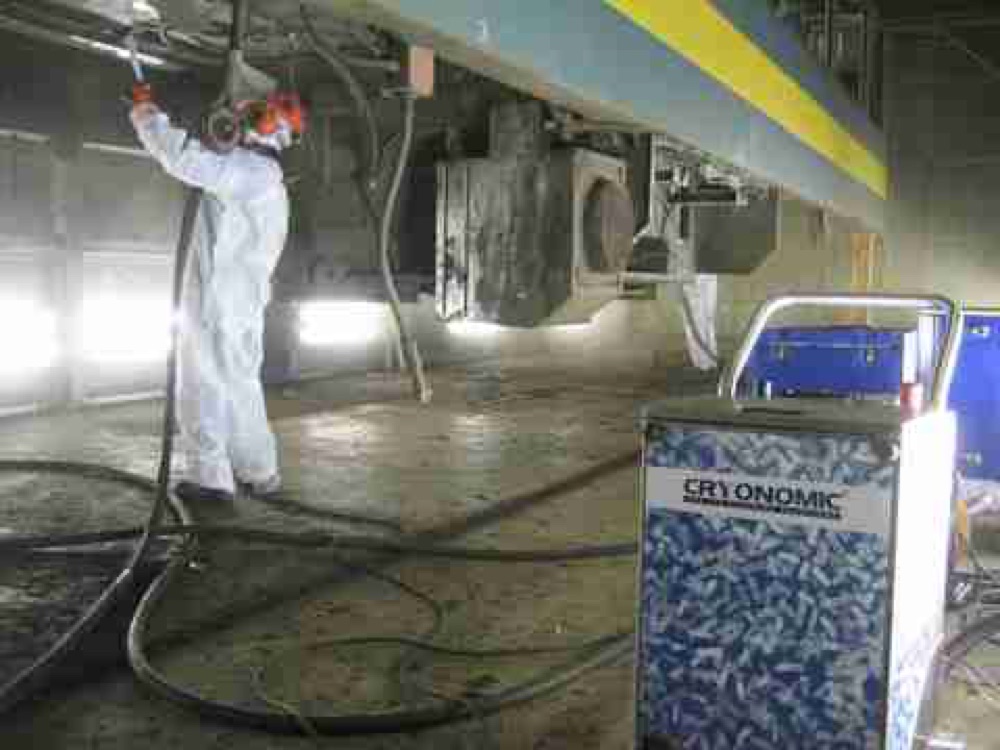
Absolutely. Dry ice blasting is a particularly eco-responsible method. You use no water and no chemicals, so contaminated waste water is a thing of the past. Moreover, the dry ice is made from recycled CO₂ captured from other industrial processes, so no new CO₂ is added to the atmosphere.
What does dry ice blasting cost?
The investment is determined by a few key factors:
- Equipment: do you choose a compact machine or a heavy industrial installation?
- Dry ice pellets: consumption depends on the working pressure and how stubborn the dirt is.
- Less downtime (ROI): operating costs are almost always more than offset by the drastic drop in production downtime. Because no dismantling is needed, the technique delivers a direct financial benefit.
When is dry ice blasting the best choice?
You resolutely choose this technique when:
- you are dealing with sensitive installations or moulds that absolutely must not be scratched;
- you work in the food industry, where moisture or contamination by other substances (soap, sand, chemicals) is undesirable;
- you need to clean electrical systems safely and dry;
- minimal production downtime is an absolute necessity for your returns;
- a 100% dry cleaning is required for your process.
Dry ice blasting compared with other techniques
Cryonomic is glad to help you make the right choices. How does dry ice compare to the alternatives?
- Sandblasting: abrasive and ideal for heavy rust removal or roughening metal, but damaging to delicate surfaces.
- High-pressure cleaning: high-pressure water is cost-effective, but produces enormous amounts of waste water and increases the risk of rust and short circuits.
- Chemical cleaning: effective, but requires strict environmental and safety protocols and leaves chemical waste behind.
- Laser cleaning: precise and waste-free, but the investment cost is considerably higher and the process is slower.
- Soda blasting: a gentle method, but it leaves a large amount of powder that must be thoroughly cleared away afterwards.
The safety of dry ice blasting
The safety of your staff is always the highest priority. When dry ice cleaning, keep the following in mind:
- Ventilation & CO₂ risks: dry ice evaporates into CO₂ gas. In enclosed spaces, good ventilation is crucial to prevent oxygen displacement.
- Personal protective equipment (PPE): always wear hearing protection, safety glasses, cold-resistant gloves and closed work shoes.
- Electrical installations: although the process is dry and safe around electronics, de-energising equipment (Lockout-Tagout) is the standard safe working practice.
Frequently asked questions
Does dry ice blasting damage my surfaces?
No. Dry ice is relatively soft and non-abrasive: it cleans without roughening or scratching the surface, even on sensitive moulds.
Is it safe for electronics?
Yes. The process is fully dry and non-conductive, so control cabinets and motors can often be cleaned in place. Do de-energise equipment following the Lockout-Tagout procedure.
Can it remove rust?
Dry ice handles light rust and deposits effortlessly. For very heavy, deep rust, dry ice is too soft and an abrasive method (or dry ice grit blasting) is needed.
Is it environmentally friendly?
Yes. You use no water and no chemicals, and the dry ice is made from recycled CO₂. So no new CO₂ is added to the atmosphere.
How long does a cleaning take?
That depends on the contamination and the surface, but because dismantling is usually unnecessary, the process is considerably faster than traditional manual cleaning.
Can this be done on site?
Yes. Cleaning can often be done straight on the production line, without dismantling or moving the machine.
Why choose Cryonomic?
Craftsmanship from the very start. With decades of experience designing and manufacturing our own blasting machines, Cryonomic guarantees robust, reliable equipment. We use the most robust components and make no compromise on quality when developing our machines.
We make time for you. Whether you are looking for advice on the right machine or need guidance implementing it on your shop floor, we provide everything in-house. And it does not stop when the materials are delivered — you can always count on our after-sales service. Our experts keep your maintenance process running flawlessly for years.