Why overhaul takes so long
A jet engine coming in for overhaul arrives caked in carbon, oil and combustion residue. Traditionally that is removed with chemical baths or abrasive media — both of which take the part out of circulation for days and introduce a waste stream that has to be treated afterwards.
Neither method is kind to the substrate. Every abrasive pass removes a little of the parent material, and every chemical bath is one more inspection to schedule.
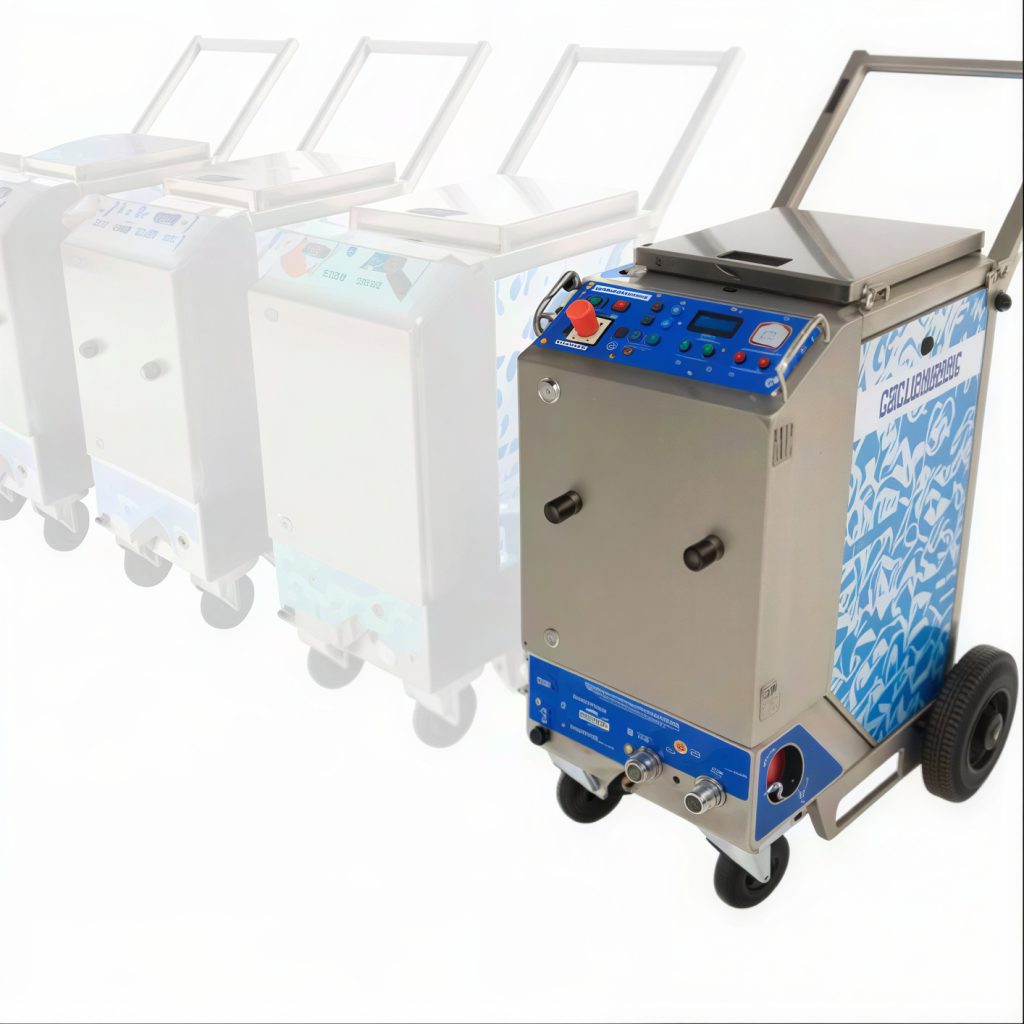
What changes with dry ice
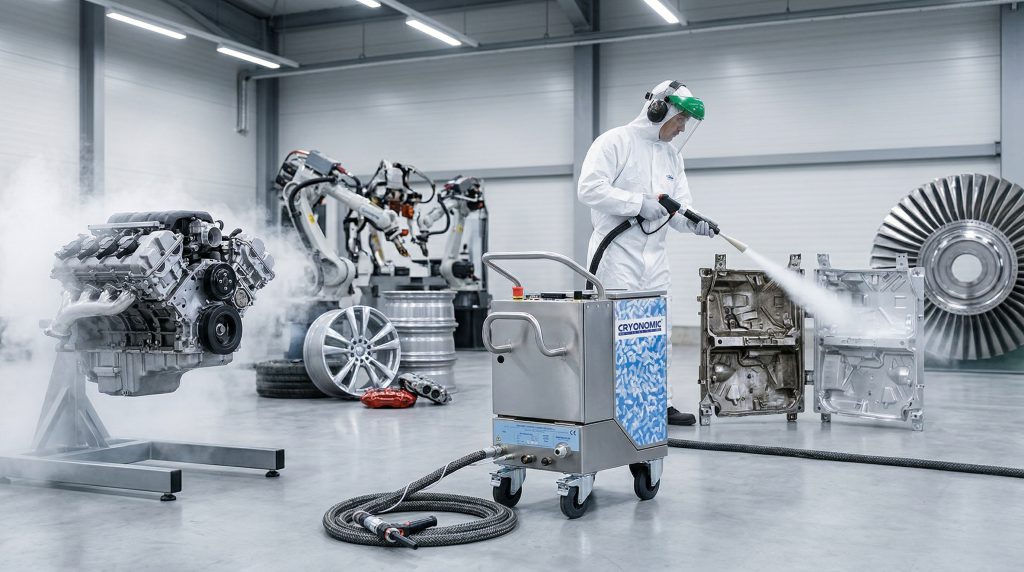
Dry ice pellets hit the surface at −78.5 °C. The thermal shock embrittles the contamination, the pellet sublimates on impact, and the residue simply lifts away. The part underneath is untouched, and there is nothing left to clean up but the dirt itself.
Mounted in a robot cell, the process becomes repeatable: the same nozzle angle, the same standoff distance, the same result on every part that passes through.
We went from a three-day cleaning cycle to a single shift, and the inspection results came back cleaner than anything we achieved with abrasive media.
John Doe — Maintenance Manager